What Is Ise Jingu? The Spiritual Home of the Japanese People
Ise Jingu, located in Ise City, Mie Prefecture, has long been affectionately known as "O-Ise-san" and is often called the spiritual home of the Japanese people. Its formal name is simply "Jingu," with no place name attached. In fact, Ise Jingu is not a single shrine but the collective name for 125 shrines centered on the Naiku (Inner Shrine) and the Geku (Outer Shrine).
The Naiku (Kotaijingu)
The Naiku's formal name is Kotaijingu. It enshrines Amaterasu Omikami, the ancestral deity of the Imperial Family, often likened to the sun. According to tradition, about 2,000 years ago, after journeying through many lands, she came to rest here on the banks of the Isuzu River.
The Geku (Toyouke Daijingu)
The Geku's formal name is Toyouke Daijingu. It enshrines Toyouke no Omikami, the guardian deity of food, clothing, shelter, and industry. She is said to have been welcomed here about 1,500 years ago as the deity who provides the sacred meals of Amaterasu Omikami.
Visit the Geku first, then the Naiku
There is no strict rule about the order of worship, but by long-standing custom it is considered best to worship first at the Geku and then proceed to the Naiku. This is called "Geku-sensai" — even the shrine's own ceremonies begin at the Geku. If you are visiting for the first time, try to keep this order in mind.
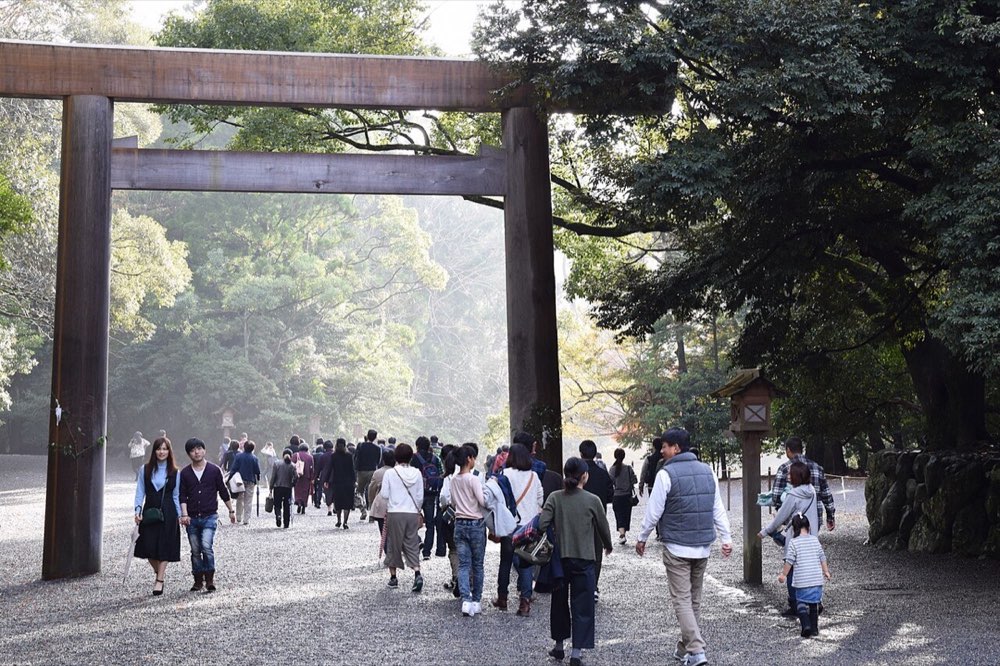
Ise Jingu is regarded less as a place to make personal requests than as a place to offer gratitude for the safe passage of everyday life. Stepping into the vast sacred grounds, surrounded by centuries-old trees and clear streams, you will feel your heart naturally grow still.
The next news arrives on LINE.
Notices, reports, and the next event openings.