Kawabiki — Participant Guide (Aug 1–2, 2026)|Tokiwakai

Tsuitachi-mairi & Kawabiki — August 1 (Sat) – 2 (Sun), 2026 / Ise

Kawabiki — Participant Guide

The Kawabiki is part of the Okihiki, held toward the Shikinen Sengu that comes once every twenty years. By the kindness of the Furuichi hoei-dan, we have been given a place to join — hauling the rope in the Isuzu River as members of the team. This is participation as a bearer of the tradition, not as a spectator.

Organized by Tokiwakai

Schedule

July 31 (Fri) — early arrival (Plan A only)

Check in to the lodging at 15:00 (the exact address and map will be sent in the formal notice). In the evening, we meet and confirm the next morning's plan, and cook dinner together.

August 1 (Sat) — Hassaku Sangu & gathering

August 1 is a special day among the monthly Tsuitachi-mairi. In Ise, worshipping the shrine at dawn on this day to pray for a good harvest and good health has long been called "Hassaku Sangu." From the opening of the Akafuku store to the morning gruel and the formal worship and kagura offering at the Naiku, we spend a full day on Ise's own tsuitachi-mairi.

The streets of Okage Yokocho and Oharaimachi before the Naiku of Ise Jingu
  • 4:45In front of Akafuku main store, Okage YokochoGather. On the first of the month, watch the store open its doors (usual opening 5:00; only on the 1st, 4:45).
  • ~5:00Akafuku main storeReceive the August-only tsuitachi-mochi, "Hassaku Awa-mochi."included in the fee
  • ~5:30Ise Jingu NaikuTsuitachi-mairi at the Naiku. Cross Uji Bridge and proceed to the main sanctuary. Formal worship begins at 8:00; the early morning is a regular visit.
  • AfterOharaimachi & Okage YokochoStroll through the streets. (Optional: those who wish may visit Sarutahiko Shrine's tsuitachi-mairi.)
  • ~8:00Ise Jingu NaikuFormal worship, with an optional kagura offering. Kagura fees vary by group size.
  • NoonAround OharaimachiA joint lunch gathering of the adult group and student network, talking across generations about the Kawabiki and future projects.
  • After lunchGeku & SengukanFormal worship at the Geku and a guided visit to the Sengukan (adult group guided separately).
  • AfternoonFutami Okitama ShrineHama-sangu (optional / for those joining from the afternoon). Purification before Okihiki.
  • AfternoonLodgingRest, to prepare for the next day's Kawabiki.
  • ~18:00Geku approach & Kamiji-doriJoin the "Yukata Thousand-Person Visit to the Geku." Please bring a yukata (free dressing available in Ise that day).
  • EveningLodgingA gathering with local people (doubling as dinner). We share the flow of the next day's Kawabiki and safety notes.

August 2 (Sun) — Kawabiki

The day's schedule of the Ominato hoei-dan. Adult participants haul the rope together. Timing shifts with conditions on the day.

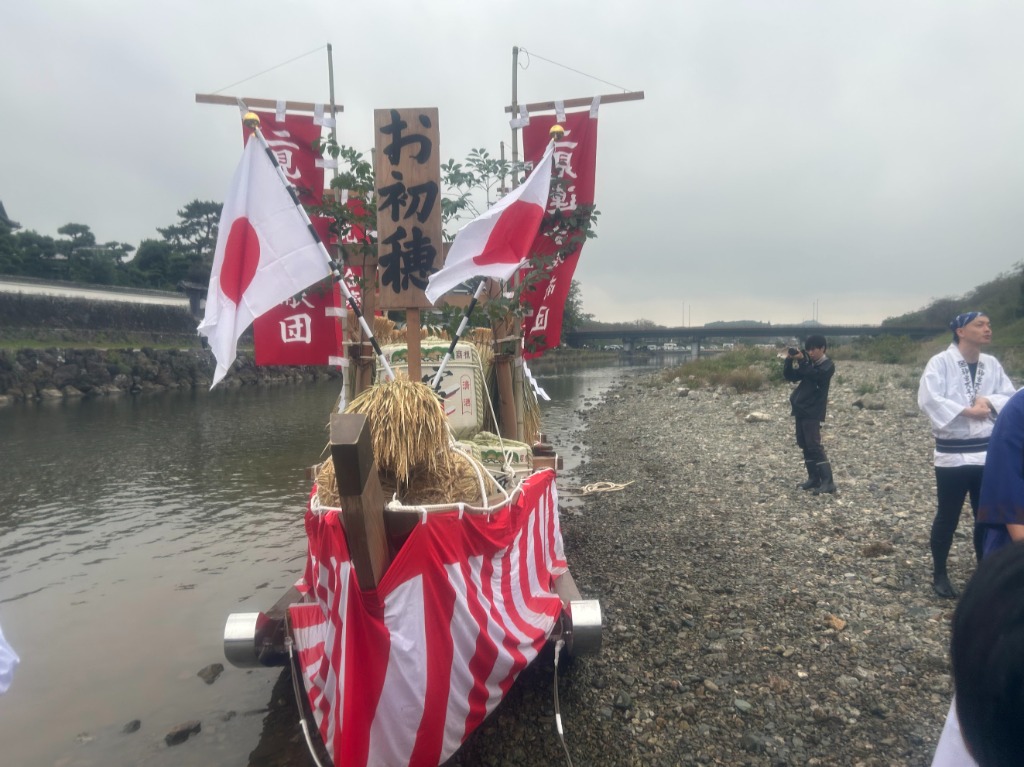
The Kawabiki (river-pulling) in the Isuzu River
  • 8:00Naiku SanshudenOkihiki hand-over (optional participation).
  • 9:30Near Urata BridgeGather (the exact meeting point will be shared once confirmed).
  • 10:001st HQ (near Urata Bridge)Departure.
  • 10:30Isuzu River, Urata BridgePass Urata Bridge.
  • 11:10Isuzu River, ShinbashiNear Shinbashi.
  • 12:00–13:00Isuzu RiverLunch (a boxed meal is provided).included in the fee
  • 13:40Isuzu River, Uji Bridge (2nd HQ)Uji Bridge (2nd HQ).
  • 14:00Naiku SanshudenThe sacred timber is offered at the Naiku; formal worship. Dismissal follows in turn.

Ominato hoei-dan attire (white garb)

Ominato's attire is white. Participants wear the happi coat of the 63rd Shikinen Sengu with the Ominato hoei-dan sash. The happi and sash (hanten) are provided as a rental (cleaning included). Please prepare the following yourself.

  • White top and bottom (white samue, white gym wear, white T-shirt, jacket, white rash guard — anything white is fine). For underlayers, prioritize safety and buoyancy; black is fine.
  • White shoes (jika-tabi, white sneakers, or fishing water shoes; no sandals). Note: the Isuzu riverbed is mossy and slippery.
  • A white hat (sun protection in midsummer) and sunscreen.
  • A waterproof white waist pouch, a waterproof phone case, and a small light-colored backpack.

Note: there is moving and changing, and you stay in the river for a long time. Women and those who are small or light may wear a swimsuit and a wetsuit top and bottom under their outer layer, for both warmth and buoyancy.

* included in the fee … the tsuitachi-mochi (Hassaku Awa-mochi), lunch on the Kawabiki day, and more. The Enya-biki moves faster than usual (roughly a jog); those unsure of their footing should refrain. Timing shifts with conditions on the day; an updated guide will be sent once confirmed.

About the participation fee

Full details of the participation fee — the amount, how to pay, and what it covers — will be shared individually via Tokiwakai's official LINE. Please feel free to get in touch.

Ask about the fee on official LINE

Official LINE: lin.ee/OYzJtHX

  • Payment is by bank transfer. Participation is confirmed upon payment.
  • Round-trip travel to Ise is not included in the fee (arranged and paid by each participant).

Available plans

A: July 31 (Fri) – Aug 2 (Sun) (with early arrival, full program)

B: Join at some point on Aug 1 (Sat) – Aug 2 (Sun) (no early arrival)

The tsuitachi-mairi on Aug 1 begins at 4:45, which same-day travel cannot reach. If you choose Plan B, please tell us at sign-up where you will join on Aug 1 (the morning tsuitachi-mairi / the midday lunch gathering / the evening yukata visit, etc.) and whether you can reach the Aug 2 Kawabiki by the 8:30 gathering (if not, the time and place you will join).

You may start with a provisional booking. After we confirm your join time together, the final booking (payment) confirms your place.

Capacity is 15. Priority is given to Tokiwakai members.

What to bring & wear

The Kawabiki means entering the Isuzu River in summer to haul the rope. You will get completely soaked. Please prepare on that basis.

Essentials

  • A full change of clothes (you will get soaked) and a towel
  • Non-slip footwear you can wear in the river (black or navy jika-tabi recommended)
  • Gloves (there have been cases of injury from friction between water-softened hands and the rope)
  • A waterproof backpack (your belongings will get wet)
  • A waterproof pouch for your phone (a zip-lock bag works)
  • Hat, sunscreen, and drinks (heatstroke prevention)

On trousers: light colors show through when wet, so wear black or navy. Loose trousers get swept by the current, so wear something fitted (no denim; momohiki recommended). Also bring attire suitable for shrine worship and casual clothes for the gathering and overnight stay.

Safety & important requests

  • Above Shinbashi, children of elementary-school age and under may not enter the river. Please take part from the middle to the front of the rope.
  • Hazards: large rocks on the upper-left bank above Shinbashi; sudden depth and shifting sand near Eboshi-iwa; slippery stone paving near Uji Bridge.
  • After the opening toast, please refrain from alcohol for the rest of the day.
  • Those traveling from afar should bring a health-insurance card in case of injury.
  • The Kawabiki follows the decisions of the organizers (the hoei-dan and event operations), including in bad weather. By the nature of the ritual, the schedule and content may change.
  • As members of the hoei-dan, please keep to the gathering time and follow all instructions. Those who do not may be declined on the day.
  • The happi coat and sash must be worn. Without them, the shrine may decline entry for the Mikakiuchi worship (the happi is provided as a rental).

Apply & contact

To join or ask a question, please contact us via Tokiwakai's official LINE. The exact gathering place and bank-transfer details will be sent by LINE and email.

Official LINE: lin.ee/OYzJtHX

If the button does not open, add us as a friend from the URL above.