Roofs That Grow Small Forests — Thatched Shrines of the Naiku and the Floating Forest of Dazaifu
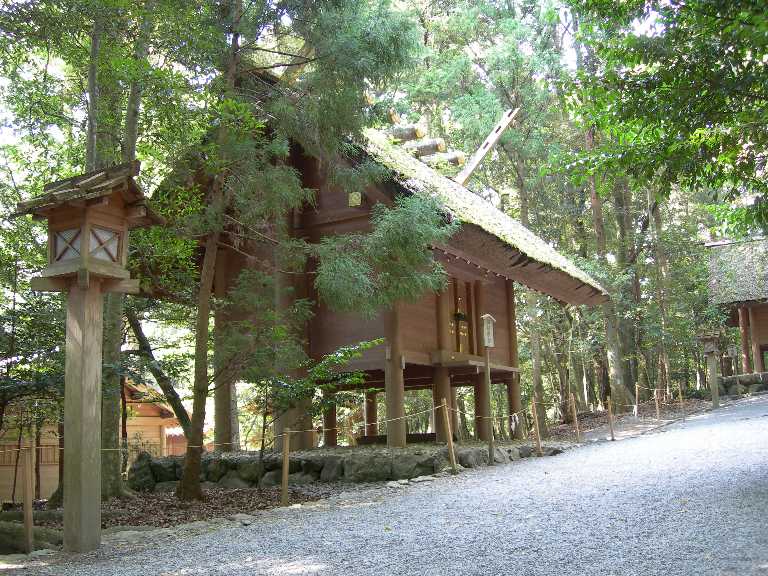
On the path from the main sanctuary of the Naiku (the Inner Shrine of Ise Jingu) toward Aramatsuri-no-miya, one of its principal auxiliary sanctuaries, two thatched-roof buildings stand side by side: the Mishine-no-Mikura, the storehouse for the sacred rice offered at the Kannamesai and other festivals, and the Geheiden. Look up, and you may find moss spreading and young plants sprouting on the thatch — as if a small forest were growing on the roof itself.
Another forest, sprouting on the thatch
Some thirteen years have passed since these buildings were rebuilt in the Shikinen Sengu of 2013 — the ceremonial reconstruction of the shrine held once every 20 years. Seeds, perhaps carried by the wind or by birds, have taken root in the thatched roofs, growing little by little with the seasons. No one planted them; the sacred forest, the rain, and the light created this landscape over time. These buildings, too, will of course be built anew at the next Sengu. Until then, this quiet greening of the roofs is a beauty of transience that can only be encountered at Ise — a place reborn every 20 years in the spirit of "Tokowaka," everlasting youth.
The "floating forest" of Dazaifu Tenmangu
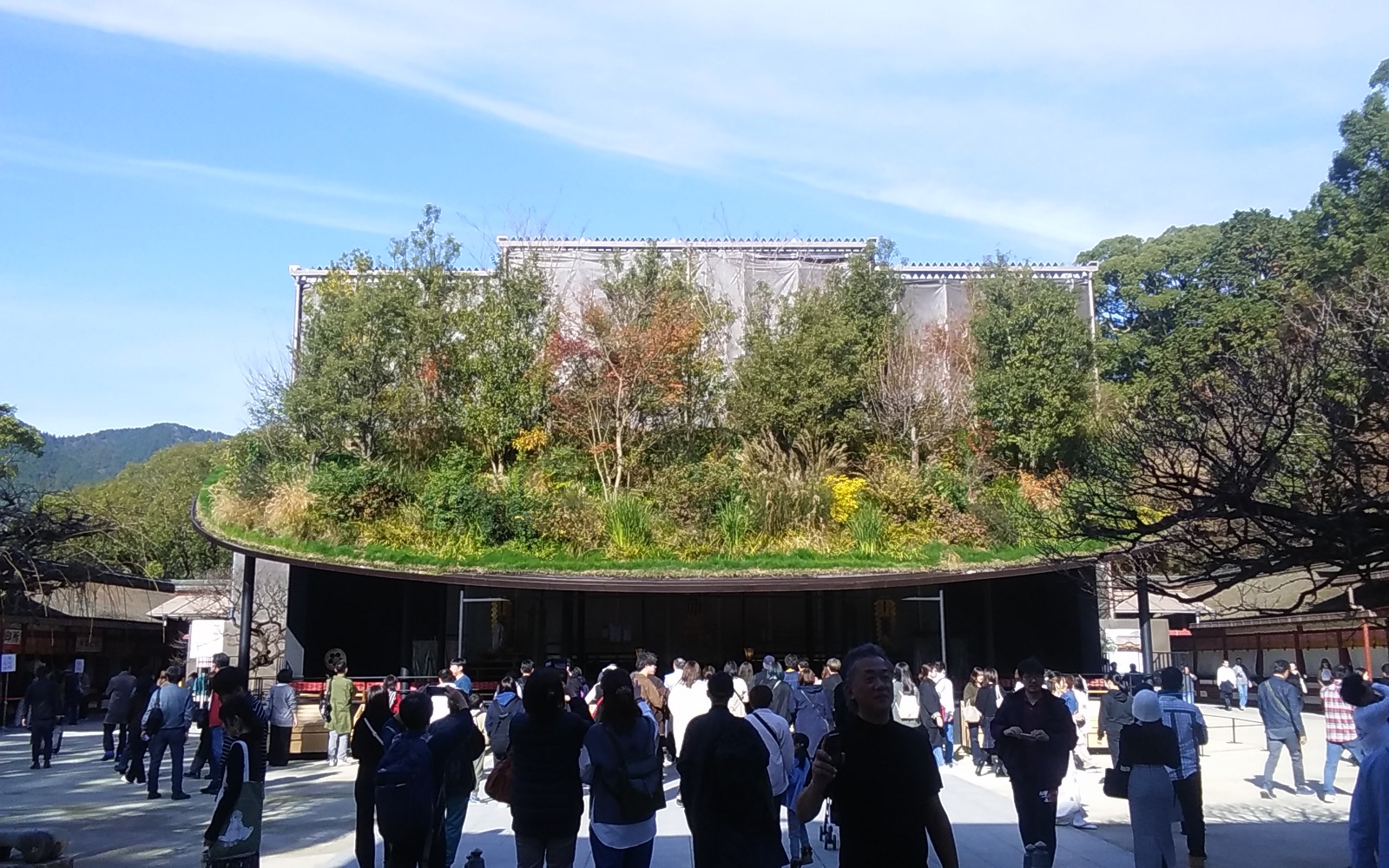
Speaking of forests on rooftops, there was another memorable building at Dazaifu Tenmangu in Fukuoka: a temporary shrine (kariden) erected for three years while the main sanctuary underwent its first major renovation in 124 years. Designed by architect Sou Fujimoto, its roof was initially planted with some 46 species of plants and came to be affectionately known as the "floating forest." The kariden completed its role on May 16, 2026, and the plants that grew so richly on its roof are reported to be replanted in the shrine grounds, where they will live on with the forest of Dazaifu.
Prayer that lives together with the forest
The rooftop forest of Ise was raised slowly by nature; the floating forest of Dazaifu was drawn by human hands. Different though their origins are, both seem to embody the same Japanese sensibility of prayer — one that treats sanctuary and forest as a single living whole. The building does not conquer nature, nor does nature destroy the building; they simply exist together.
When you visit the Naiku, take a moment to look not only at the main sanctuary but also at the roofs of the Mishine-no-Mikura and the Geheiden. The small forest swaying on the thatch will quietly tell you how time flows in Ise.
The next news arrives on LINE.
Notices, reports, and the next event openings.