Futami Okitama Shrine and the Meoto Iwa — The Beach of Purification Before an Ise Pilgrimage
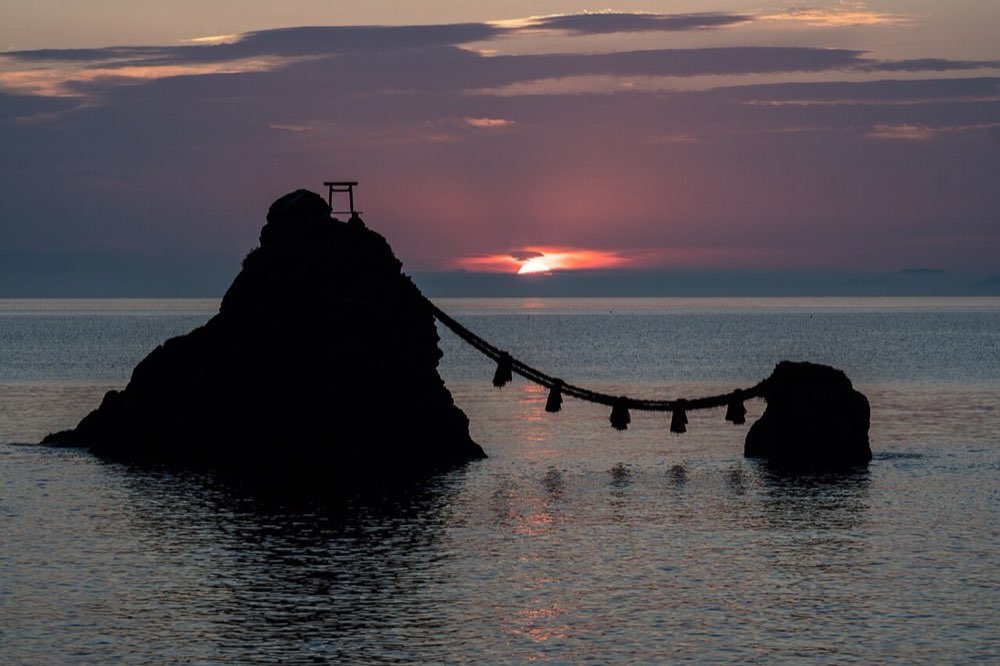
On the calm shore of Futamigaura in Ise City's Futami district stand the Meoto Iwa — the "Wedded Rocks," two rocks large and small joined by a great sacred rope (shimenawa). One of the iconic sights of Ise, they stand near Futami Okitama Shrine.
What the Meoto Iwa face
The Meoto Iwa are not themselves the object of worship: they serve as a torii gate for venerating the Okitama Shinseki, a sacred stone submerged offshore, and the great deity of the sun — the morning sun — rising beyond it. The sacred rope joining the two rocks marks the boundary between the divine realm and the everyday world.
The custom of Hamasangu
Futamigaura has long been called the "beach of purification" (Misogihama). Before worshipping at Ise Jingu, pilgrims would bathe here in the sea to purify body and mind — a custom called Hamasangu. Even today, many worshippers receive purification at Futami Okitama Shrine before proceeding to Jingu, and the practice is continued by those taking part in the ceremonies of the Shikinen Sengu.
The summer solstice sunrise
Around the summer solstice, the sun rises directly between the two rocks — and in good conditions, a sublime scene appears as it aligns with distant Mount Fuji. The Summer Solstice Festival is held at this season. Before or after your Ise pilgrimage, do venture out to Futamigaura and spend a moment letting the sea and the morning sun cleanse your heart.
The next news arrives on LINE.
Notices, reports, and the next event openings.